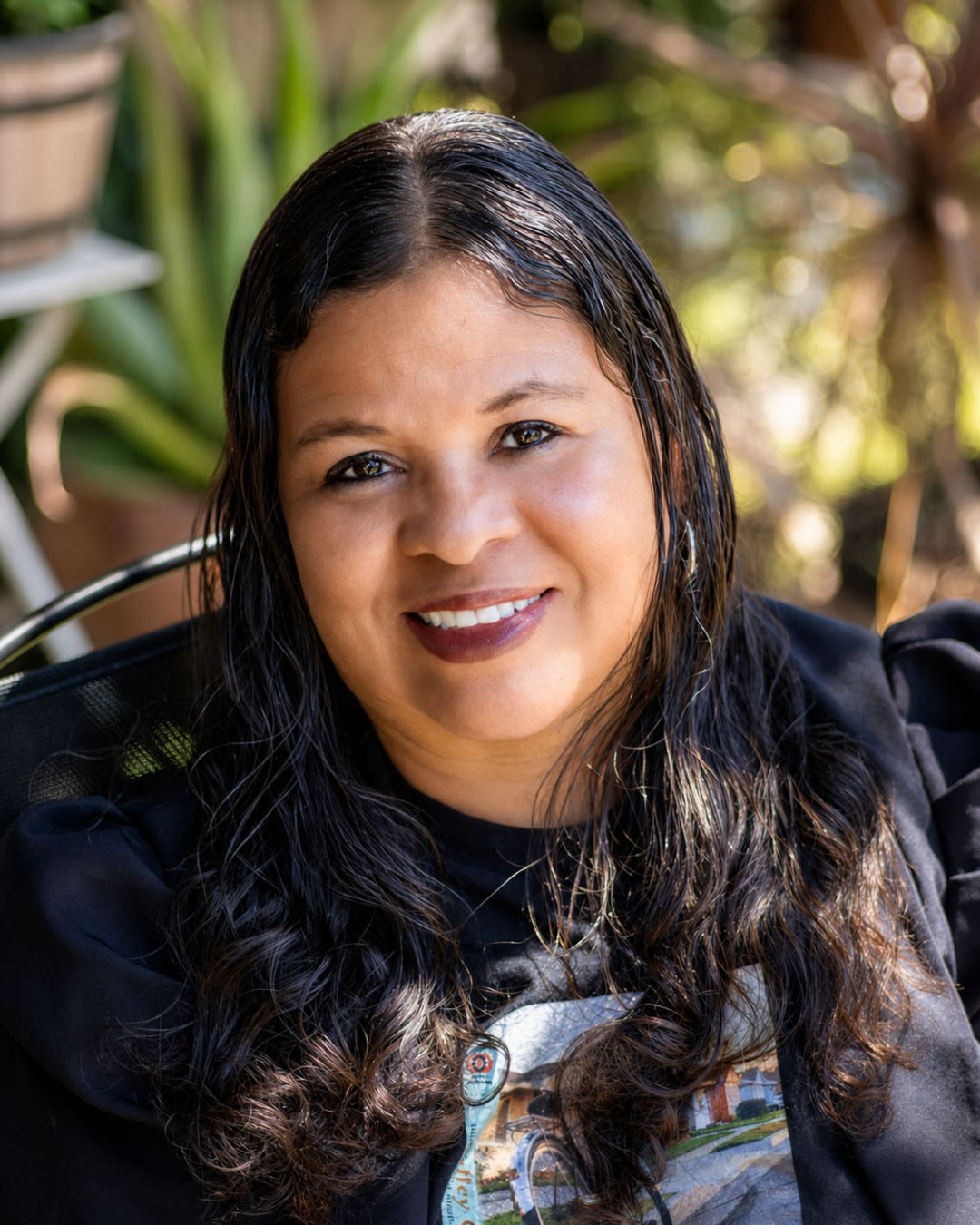
Crystal Jackson is an acclaimed author, historian, filmmaker, and cultural preservation advocate whose work has helped bring greater national attention to the history, people, and legacy of Pacoima and the San Fernando Valley. As Founder and President of the Pacoima Historical Society, Jackson has emerged as a leading voice in documenting and preserving the stories of communities whose contributions have often been overlooked in traditional historical narratives.
A native of Pacoima, California, Jackson has dedicated years to researching the region’s history, conducting hundreds of interviews with residents, civic leaders, community pioneers, and families whose personal histories illuminate the broader story of Los Angeles. Her scholarship and storytelling challenge long-standing stereotypes while celebrating the extraordinary achievements of the people who have shaped Pacoima and the San Fernando Valley.
In 2019, Jackson published "The Entrance: Pacoima’s Story," an ambitious historical work chronicling approximately 1,500 years of Pacoima’s history. The book documents the community’s evolution while highlighting its significant contributions to civic leadership, civil rights, sports, culture, and the development of Los Angeles. Her research has brought renewed attention to Pacoima’s elected officials, civil rights leaders, Heisman Trophy winners, world-champion athletes, and its place in the history of Black suburban development in America.
Jackson’s work has been featured by major media organizations including ABC, CBS, PBS, NPR, Los Angeles Times, and the Los Angeles Daily News, reflecting the growing recognition of her efforts to preserve and interpret Southern California history.
Her storytelling extends beyond the printed page. As a filmmaker and screenwriter, Jackson has written several motion-picture screenplays and directed the award-winning documentary "PacoimaStories: Land of Dreams." The film received the "Best Feature Documentary" award at the Pan African Film Festival, further establishing her reputation as a compelling visual storyteller committed to documenting communities from the inside out.
Jackson is also actively engaged in historic preservation and education. She serves on the Advisory Council for the Getty Conservation Institute and the City of Los Angeles Office of Historic Preservation. She has also worked as a special consultant with the UCLA History-Geography Project, contributing to efforts to integrate local history into the Los Angeles Unified School District curriculum. Her civic and educational service has included leadership roles with the Center for Advanced Learning Charter School and the Museum of the San Fernando Valley.
As an author, Jackson has expanded her work into historical fiction, bringing overlooked Los Angeles stories to a broader audience. Her novel "Not Colored" is inspired by the life of Veda James, an African American woman who became the first female to work in the Los Angeles Police Department’s detective unit. Her historical novel *The Marilyn Monroe Connection* explores the story of Pacoima resident Lionel Grandison, the man who signed Marilyn Monroe’s death certificate and later challenged the official suicide ruling surrounding her death.
Jackson’s latest major work, "Valley Chronicles: Told & Untold Stories of the San Fernando Valley," broadens her historical focus to the entire San Fernando Valley. Combining historical narrative with an extensive photographic record, the book traces the region from its geological origins and Indigenous civilizations through Spanish colonization, industrialization, suburban expansion, and modern development. The work brings together familiar milestones and lesser-known stories to offer a more comprehensive portrait of one of Southern California’s most influential regions.
At the center of Crystal Jackson’s career is a commitment to historical truth, cultural memory, and community preservation. Through books, documentary filmmaking, archival research, education, and public advocacy, she continues to recover stories that might otherwise be forgotten and to ensure that the history of Pacoima and the San Fernando Valley is preserved for future generations.
Her work reflects a larger mission: to demonstrate that local history is not merely local—it is an essential part of the American story.