Grandison was only twenty-two when his career appeared to be taking off. He was newly married, had purchased a home, and was steadily advancing through Los Angeles County civil service. His work placed him near several major death investigations of the era, including those involving television actor George Reeves, comedian Ernie Kovacs, and Ronald T. Stokes, whose controversial death at the hands of Los Angeles police became connected to a historic confrontation involving Malcolm X.
Marilyn Monroe was found dead in her Brentwood home, and the official investigation moved rapidly toward a finding of probable suicide. According to Grandison’s account, however, aspects of the case raised serious concerns. The record he later described included questions surrounding police reports, missing body tissues, a diary, unexplained drugs in Monroe’s system, and the decision not to convene a coroner’s inquest. Grandison ultimately signed Monroe’s death certificate recording the official finding of “probable suicide.”
For Grandison, that signature would become much more than a bureaucratic act.
Jackson’s novel explores the human consequences behind the famous case: a young man wrestling with what he had witnessed, the pressures surrounding his work, and the effects the controversy had on his career, marriage, dignity, and family life. Rather than treating her father simply as another figure in the long-running Marilyn Monroe conspiracy debate, Jackson places his personal journey at the center of the story.
That emotional dimension distinguishes The Marilyn Monroe Connection from traditional books about Monroe’s death.
Jackson has said that she initially resisted becoming involved in the controversy because she had witnessed firsthand the pain it caused her father and family. Grandison spent decades attempting to tell his version of what occurred inside the coroner’s office. After his death in January 2021, Jackson came to believe that preserving and telling his story had become part of her own responsibility.

Former Deputy Coroner's Aide Lionel Grandison and his daughter author Crystal Jackson in 2009
For Jackson, the heart of the novel remains her father.
He was not yet a famous whistleblower or controversial historical figure when Monroe died. He was a young Black man with a promising career, a new marriage, a home, and his entire future ahead of him. According to Jackson, everything changed when he reported for work on that Sunday morning in August 1962.
The Marilyn Monroe Connection ultimately becomes more than a novel about the death of a Hollywood legend. It is the story of two lives unexpectedly joined by history—one belonging to the most famous actress in the world, and the other to a young county employee whose name would remain connected to her death for decades.
Blending historical fiction, family drama, mystery, and true-crime intrigue, Crystal Jackson gives readers a deeply personal perspective on an American story that has never completely faded from public imagination.
And through rare photographs and historical documents preserved by the Grandison family, the book gives readers something even more intimate: a glimpse into the life of the man behind the signature on Marilyn Monroe’s death certificate.
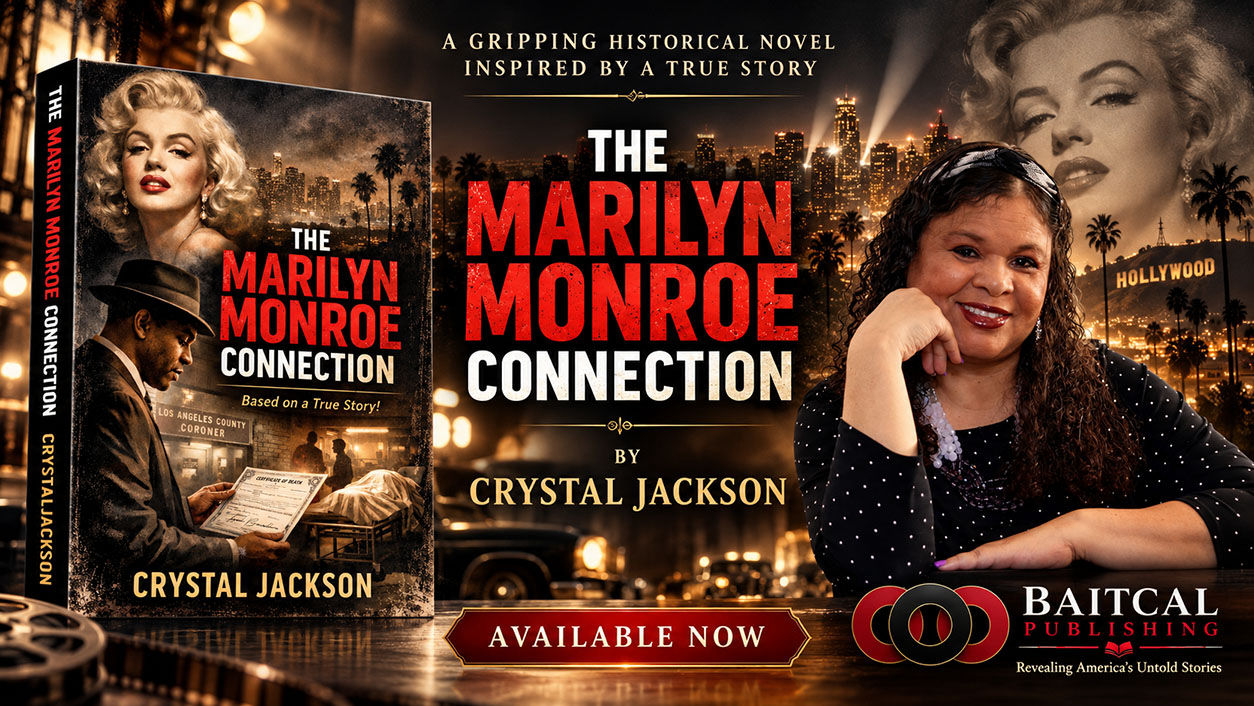
Crystal Jackson’s book, “The Marilyn Monroe Connection,” is on Amazon. You can also order an autographed edition by clicking here.
SHARE THIS PAGE!